Understanding Epoxy Garage Floors
When it comes to enhancing the functionality and aesthetics of your garage, Epoxy Garage Floor solutions are at the forefront. These flooring systems not only rejuvenate old concrete surfaces but also provide a protective layer that can withstand heavy use and environmental stressors. In this comprehensive guide, we will explore the essential aspects of epoxy garage floors, from their composition and benefits to maintenance practices that ensure longevity.
What is an Epoxy Garage Floor?
An epoxy garage floor is a flooring system made from a combination of resins and hardeners that create a durable surface. The epoxy coating is applied to concrete floors, providing a high-gloss finish and offering superior adhesion and resistance to stains, chemicals, and abrasions. This flooring option is ideal for garages as it not only enhances appearance but also protects the underlying concrete from moisture, oil, and other damaging substances.
Benefits of Installing an Epoxy Garage Floor
- Durability: Epoxy floors are incredibly tough, able to withstand heavy traffic and impact without chipping or cracking.
- Easy Cleaning: The smooth, non-porous surface of epoxy floors makes cleaning simple. Spills can be wiped away without staining.
- Enhanced Aesthetics: Available in various colors and finishes, epoxy flooring can transform a dull garage into an attractive space.
- Slip Resistance: Epoxy formulations can be adjusted to increase traction, making them safer in slippery conditions.
- Environmentally Friendly Options: Many epoxy products are made from VOC-free materials, reducing harmful emissions during application.
Common Misconceptions About Epoxy Flooring
Despite the growing popularity of epoxy garage floors, several misconceptions persist. One common myth is that epoxy floors are slippery; however, manufacturers now include additives that enhance slip resistance. Others believe that the application process is too complex or that the floors require constant maintenance. In reality, with proper preparation and installation, epoxy floors can last for years with minimal care.
Choosing the Right Epoxy for Your Garage
Choosing the correct type of epoxy for your garage is crucial for achieving the desired performance and aesthetic. Factors such as the level of traffic, exposure to chemicals, and personal style preferences all play a role in selecting the right product.
Types of Epoxy Coatings Available
- Water-Based Epoxy: This is ideal for those looking for a more environmentally friendly option. It emits fewer VOCs and is easier to apply.
- Solvent-Based Epoxy: Known for its durability and glossy finish, this type provides excellent adhesion but emits higher levels of VOCs.
- 100% Solid Epoxy: This option offers the thickest and most durable coating, suitable for high-traffic areas, but requires a more skilled application.
Factors Influencing Your Choice of Epoxy
When selecting an epoxy for your garage, consider the following:
- Traffic Levels: High-traffic areas require thicker coatings for maximum durability.
- Usage: If your garage is used for heavy-duty activities, choose a robust epoxy type.
- Aesthetic Preferences: Select colors and finishes that complement your home and personal style.
Best Selling Colors in 2026
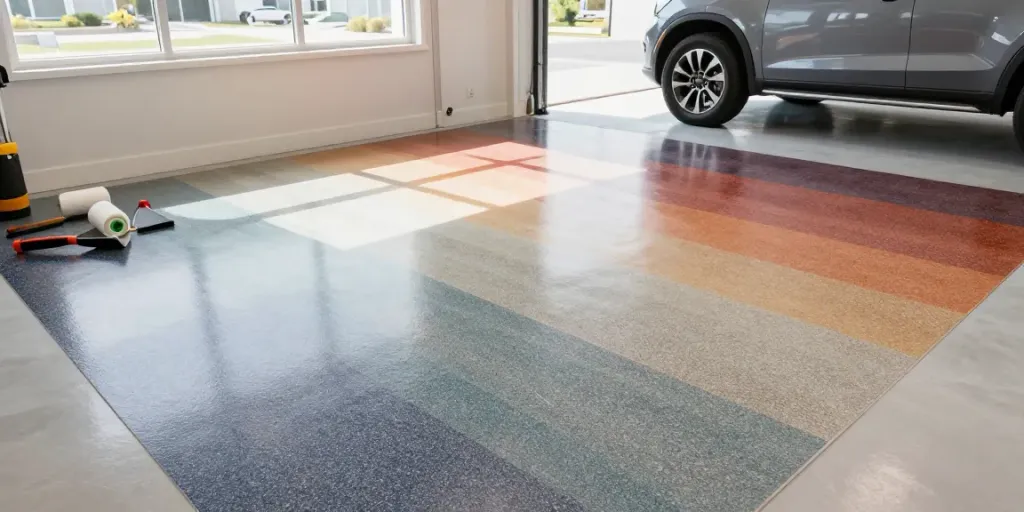
As we move through 2026, some colors stand out as the most popular choices for epoxy garage floors. Classic tones such as gray and beige remain timeless, while custom flake options offer rich aesthetics and unique finishes. Metallic shades are also on the rise, providing a futuristic look.
Application Process for Epoxy Garage Floors
Applying an epoxy coating requires proper preparation, which is vital for ensuring a strong bond and a flawless finish. Below are the steps involved in the application process.
Prepping Your Garage for Installation
- Cleansing the Surface: Remove all dirt, oil, and debris from the concrete surface using a degreaser and a power wash.
- Repairing Cracks: Fill any cracks or holes with a concrete filler to create a smooth surface.
- Etching the Concrete: Etching the surface with a concrete etcher creates a rough texture that helps the epoxy adhere properly.
Step-by-Step Application Guide
- Mix the Epoxy: Following the manufacturer's instructions, mix the resin and hardener in a clean container.
- Apply the Base Coat: Use a roller to apply the base coat evenly across the surface, starting at one corner and working your way out.
- Broadcast Flakes: If adding color flakes, broadcast them into the wet epoxy base coat until full coverage is achieved.
- Apply the Top Coat: Once the base coat has cured, apply the top coat for added protection and shine.
Expert Tips for a Successful Epoxy Floor
- Always work in a well-ventilated area to minimize inhalation of fumes.
- Wear protective gear, including gloves and a mask, during application.
- Follow drying times carefully to ensure each layer cures correctly.
Maintenance and Care for Epoxy Floors
Maintaining an epoxy garage floor is straightforward, but there are best practices to ensure its longevity and appearance remain intact over time.
Best Practices for Cleaning Epoxy Garage Floors
- Regular Sweeping: Keep the floor free of dust and debris to prevent scratching.
- Use Mild Cleaners: For deeper cleaning, use a pH-neutral cleaner and a mop to maintain the finish.
- Spot Clean Stains Promptly: Address spills immediately to prevent staining.
Long-Term Care and Durability Insights
Epoxy floors are designed to last, but environmental factors can impact their longevity. Avoid using harsh chemicals that can deteriorate the finish and consider periodic re-coating to restore shine.
Common Problems and Solutions
Despite their durability, epoxy floors can experience issues. Common problems include peeling, yellowing, and cracking. If peeling occurs, it may be due to improper application; addressing this requires scraping the affected areas and reapplying the epoxy. Yellowing can happen from excessive UV exposure, which may necessitate the use of a UV-resistant product for future applications.
Future Trends in Epoxy Garage Flooring
The epoxy flooring market is rapidly evolving, with innovations focusing on aesthetics, durability, and environmental sustainability. Emerging trends are reshaping the landscape, making epoxy solutions more appealing.
Innovations in Eco-Friendly Epoxy Materials
As awareness of environmental issues grows, manufacturers are developing eco-friendly epoxy materials that minimize harmful emissions while maintaining performance. These innovations are paving the way for safer application processes without sacrificing quality.
Predictions for Epoxy Flooring in Residential Spaces
Future predictions indicate that epoxy flooring will continue to gain popularity in residential spaces beyond garages. Homeowners are incorporating epoxy solutions into basements, patios, and even kitchens, thanks to their durability and ease of maintenance.
How to Stay Ahead of Market Trends
For homeowners looking to upgrade or maintain their spaces, staying informed about the latest trends in epoxy flooring can provide significant advantages. Regularly researching new products and seeking professional advice will ensure you make informed decisions.
How Much Will it Cost to Epoxy a Garage Floor?
The cost of epoxy garage floor installation varies based on material choice, square footage, and professional labor rates. On average, homeowners can expect to pay between $3 to $12 per square foot, including materials and labor. Higher-end options with custom colors or patterns may elevate costs.
Is It Worth It to Epoxy a Garage Floor?
Investing in an epoxy garage floor can significantly increase your property's value while enhancing the usability of your garage space. With its durability, aesthetic appeal, and low maintenance requirements, many homeowners find that the benefits far outweigh the initial costs over time.